By Board Member: Mayling Hernandez
Growing up, my life was a tale of two worlds. In the United States, comfort was an invisible given: running water, air conditioning, and a water heater that worked at the flick of a switch. But my summers were spent in Paiján, Peru, at my Great Uncle’s home. It was there that my understanding of “necessity” was forever changed.
The Rhythm of the Street
One of my earliest memories of Peru is the sound of the water truck. It had a low, heavy rumble as it drove slowly down the dusty streets. Before it even arrived, the neighborhood women were ready. They had a precise, tireless system: they would rush to the truck with empty buckets, fill them to the brim, and run back to their homes to dump the water into larger containers. Then, they would turn around and run back to the truck to do it all over again before it moved on.
Even a shower was a labor of love. Because the Peruvian summers could be cold, my aunts would whistle tea kettles on the stove, heating water over and over again to fill a large bucket so I wouldn’t be cold. Later, when we stayed at a relative’s farm, the reality was even sharper: the “house” was just brick walls, and the bathrooms were often just buckets under the beds or a hole out in the field.
A Lesson in Dignity
As I got older, I began to notice a “hierarchy of need” regarding school. In the States, I had six or seven uniforms; in Paiján, my cousins had two or three. But near my relative’s farm, I saw a different reality entirely.
The children there didn’t have uniforms at all. They went to school in whatever they had available—often worn-out shoes and clothes that were stained and desperately needed washing. Seeing them made me realize that even the “basics” like soap or a clean shirt are actually the building blocks of a child’s confidence.
Despite these challenges, I didn’t witness a “horror” of poverty; I witnessed beauty and incredible skill. I remember my grandmother bringing yards of fabric to one of my aunties, who would transform them into the most beautiful dresses. I witnessed how all my aunties would gather in the living room every night to crochet and knit. My grandmother told me that their needlework and sewing was a way to put food on the table when she was growing up. In my world, we “bought” solutions; in theirs, they “created” them.
From Resilience to Excellence
As Peru has modernized, my family has excelled. Through immense hard work and a commitment to education, they moved from the “math” of two school uniforms to lives of modern opportunity. Their success is a testament to what happens when resilience meets opportunity.
However, I know that there are still areas in this world where children are living in the exact conditions I witnessed—where children go to school in worn-out clothes, hoping for a chance to succeed. They have the same joy, the same beauty, and the same potential as my family, but they are waiting for the resources to help them step into their own future.
Why I Serve: Compassion Beyond Borders Foundation Inc.
This is why I am so proud to serve on the board of Compassion Beyond Borders Foundation Inc. We are dedicated to supporting children in countries outside the U.S. who are waiting for their own “full circle” moment.
We are already in motion:
- In Nicaragua: Our Board President, Gema Gallo, and her family have used their own funds to provide direct aid to children in Rio Grande and Esteli.
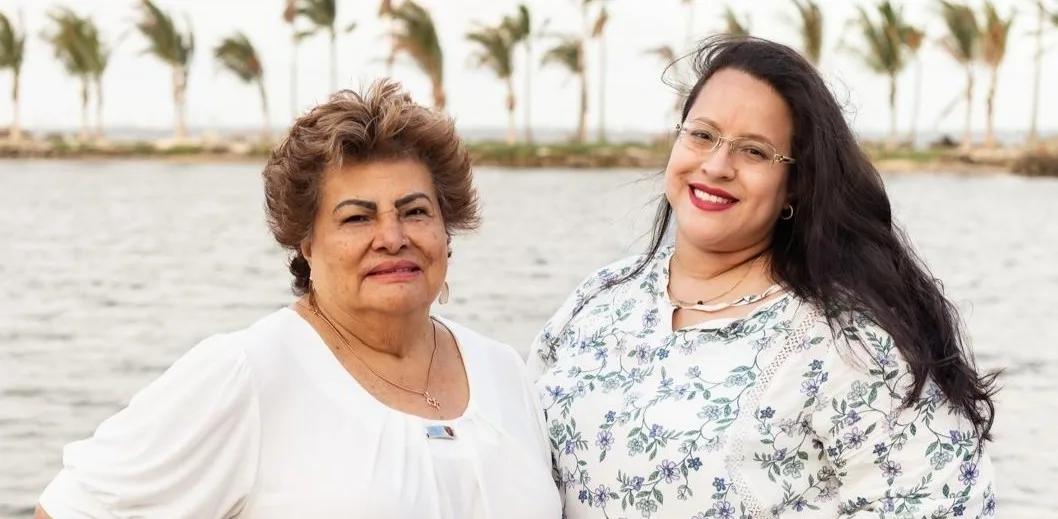
- In Honduras: My mother and I have been blessed to contribute personalized items to children in Choluteca, ensuring they feel the same “warmth” my family in Peru once gave me.
When we provide a child with personal sanitary items or school materials, we aren’t just giving them “stuff.” We are giving them the dignity to walk into a classroom and the tools to excel—just as my family did. At Compassion Beyond Borders Foundation Inc., we believe that every child deserves to feel prepared. I am honored to use my history and my heart to help this mission grow.